
WordRocket AI Review: AI-Powered Content Generation for SEO & Marketing
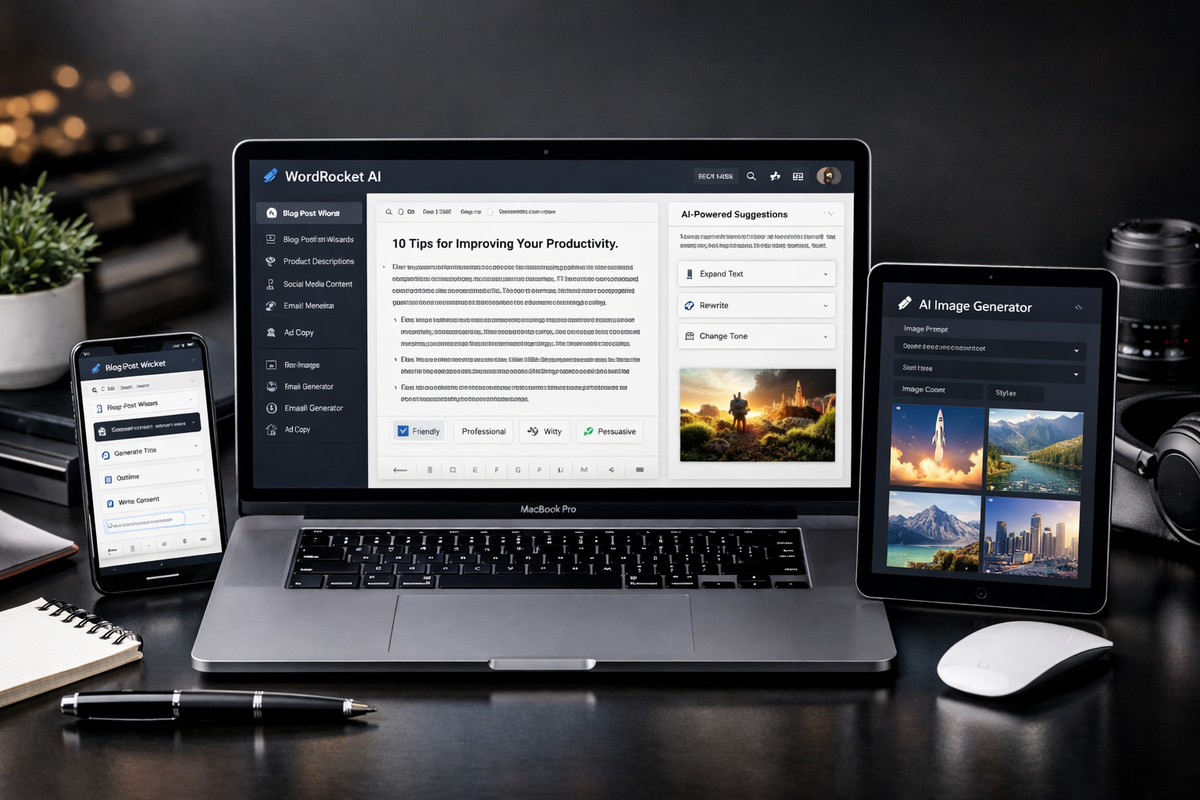
WordRocket AI is an AI content generation platform built specifically for WordPress & Ghost users who need to produce SEO-optimized long-form articles at scale.
Last updated: March 7, 2026
Key Takeaways
- WordRocket AI automates SEO-optimized content creation from research to WordPress publishing, using multiple AI models including GPT-4, Claude, Perplexity, and Gemini.
- Lifetime deals start at $199 for unlimited articles, making it significantly cheaper than ongoing subscriptions for high-volume content creators.
- The platform generates fact-checked, human-like content that scores well on AI detection tests, reducing the need for extensive rewrites.
- WordPress integration allows direct publishing with automated internal linking and SEO optimization built in.
- The BYOK (Bring Your Own API Key) model gives users control over AI costs and model selection.
- Keyword research tools are absent, requiring users to source keywords independently before content creation.
- Best suited for solo bloggers, affiliate marketers, niche site builders, and small agencies producing consistent long-form content.
- Monthly plans start at $10, with a free tier offering 10 articles per month for testing.
Quick Overview
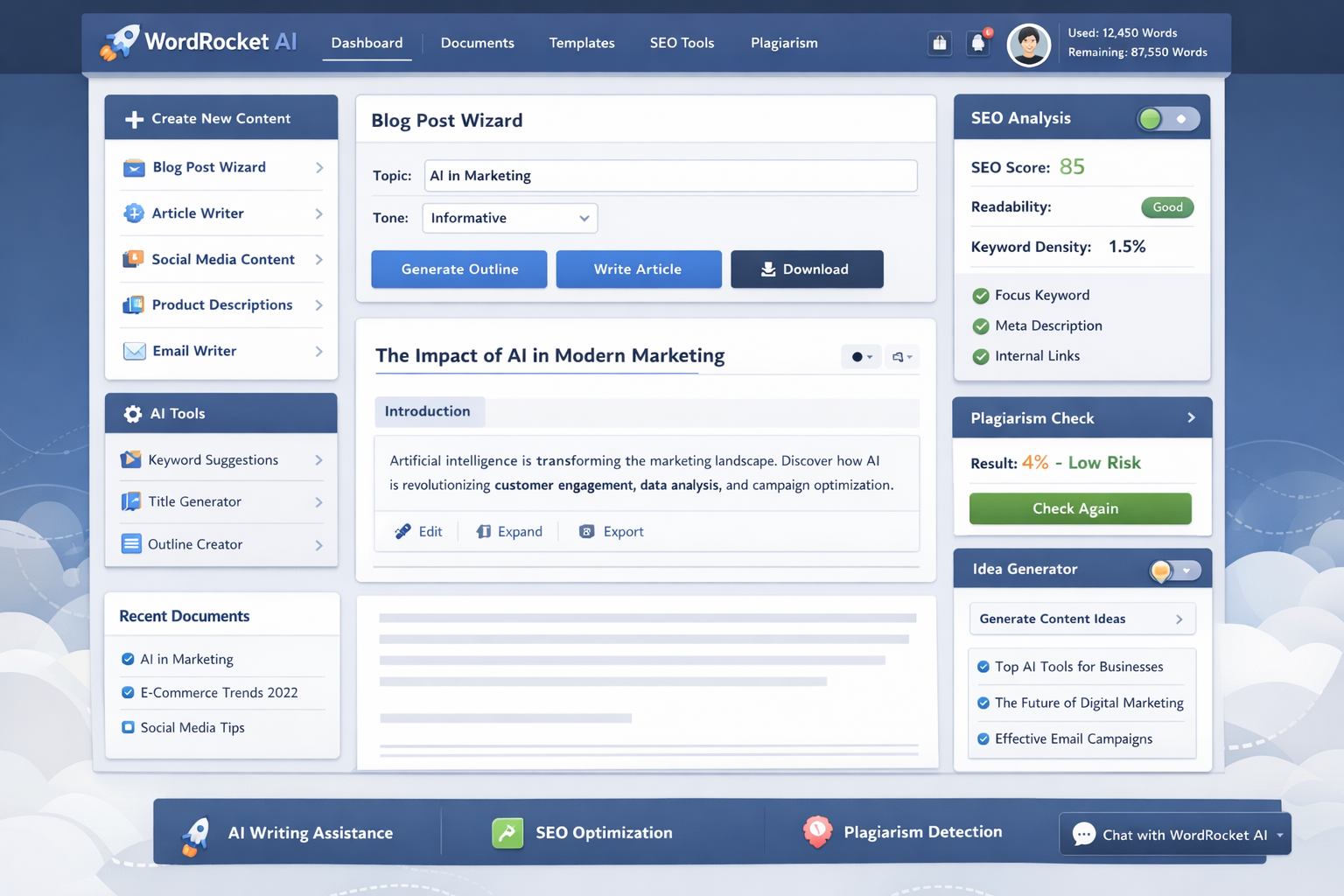
WordRocket AI is an AI content generation platform built specifically for WordPress users who need to produce SEO-optimized long-form articles at scale. The platform combines multiple AI models to research, write, and publish fact-checked content directly to WordPress sites, with lifetime pricing options that eliminate recurring subscription costs for high-volume users. It works best for content marketers and bloggers who already have keyword strategies in place and need to automate the actual writing and publishing workflow.
What Is WordRocket AI and What Problem Does It Solve?
WordRocket AI is an AI-powered content automation platform that handles the complete workflow from topic input to published WordPress article. The platform addresses a specific pain point for content marketers: the time-consuming process of researching, writing, optimizing, and publishing SEO-focused blog posts.
The tool leverages multiple AI models simultaneously. Perplexity handles fact-checking and research, while GPT-4, Claude, and Gemini contribute to content generation. This multi-model approach aims to produce articles that read more naturally than single-model outputs and include verified information rather than AI hallucinations.
WordRocket AI targets WordPress users specifically, with native integration that publishes content directly to WordPress sites, including featured images, proper formatting, and internal linking. The platform was designed for users who need to maintain consistent publishing schedules without hiring full-time writers or spending hours on each article themselves.
The core value proposition centers on three elements: speed (automating what typically takes hours), cost (lifetime deals versus ongoing writer fees or subscriptions), and quality (fact-checked content that passes AI detection). For affiliate marketers managing multiple niche sites or agencies handling client blogs, this combination addresses the scalability challenge of content production.
How Does WordRocket AI's Content Generation Actually Work?
WordRocket AI's content creation process starts when you input a keyword, topic, or outline. The platform then follows a multi-stage workflow that mimics human research and writing processes.
Research Phase
The system uses Perplexity AI to gather current information about your topic. This research layer pulls from recent sources rather than relying solely on training data cutoff dates. The fact-checking component cross-references claims across sources to reduce inaccuracies that plague single-model AI content.
Content Generation
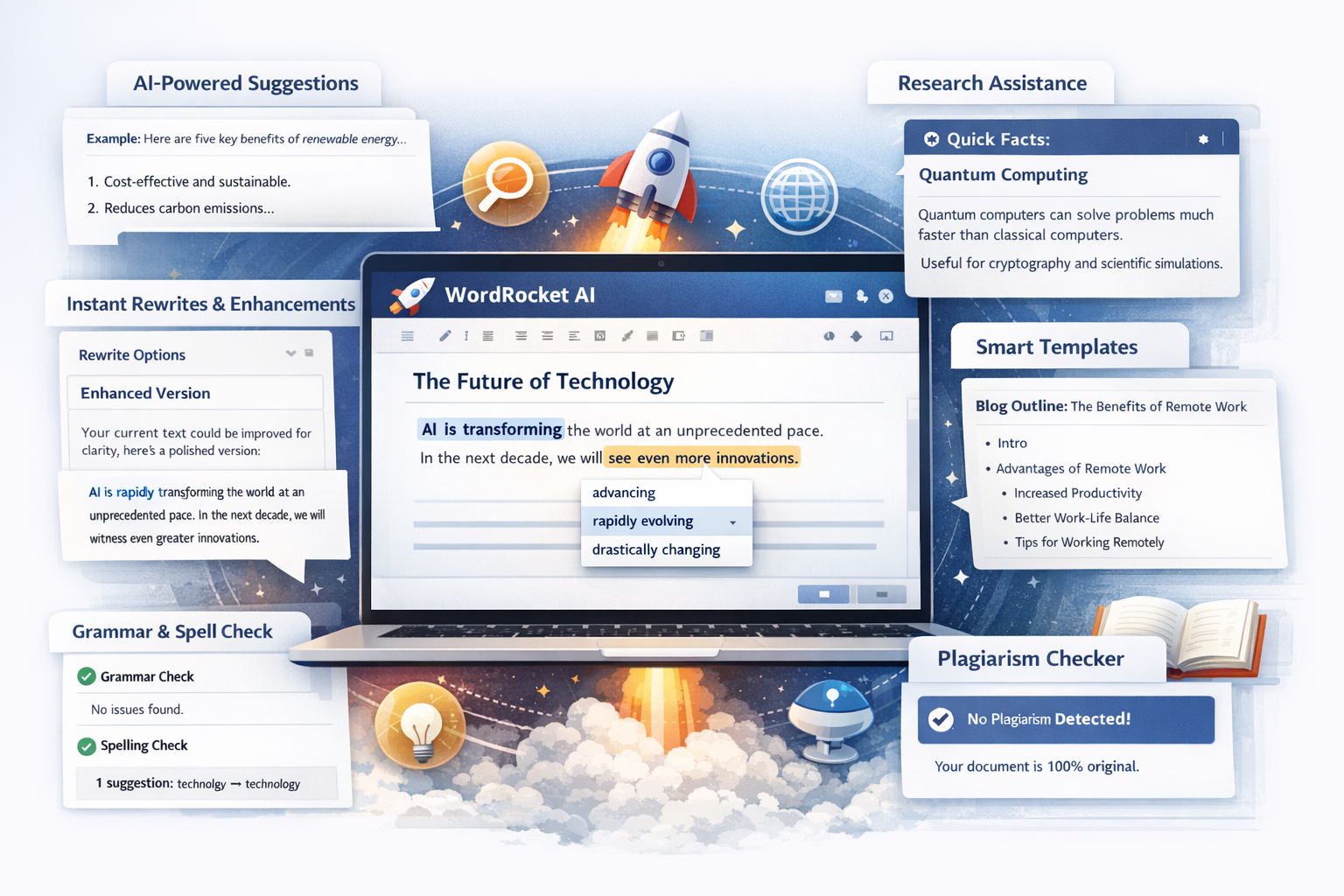
After research, WordRocket AI employs GPT-4, Claude, or Gemini (depending on your settings and plan) to draft the article. The platform structures content with proper heading hierarchy, incorporates the researched facts, and applies SEO formatting including meta descriptions and keyword placement.
The multi-model approach means you can specify which AI engine handles different parts of the process. For example, you might use Claude for creative introductions and GPT-4 for technical sections, though most users stick with default settings.
SEO Optimization
Built-in SEO features include automatic internal linking to existing content on your WordPress site, heading optimization, and keyword distribution. The platform analyzes your existing sitemap (you can connect up to 5-25 sitemaps depending on your plan) to identify relevant internal linking opportunities.
WordRocket AI also generates AI images to accompany articles. The free plan includes 20 AI images monthly, while premium tiers offer 300-550 images. These integrate directly into the published WordPress posts.
Publishing Workflow
The final step publishes directly to your connected WordPress sites. You can schedule posts, set categories and tags, and apply your brand voice settings. The bulk generation mode (available on Pro plans and above) lets you queue multiple articles for automated publishing.
The BYOK (Bring Your Own API Key) model means you supply your own API keys for AI services. This gives you cost control and transparency—you pay AI providers directly based on usage rather than through marked-up subscription tiers. The free plan includes BYOK access, making it viable for budget-conscious users willing to manage API costs.
What Features Distinguish WordRocket AI from Generic AI Writing Tools?
WordRocket AI includes several features specifically designed for content marketers and SEO professionals rather than general writing assistance.
Brand Voice Training
The platform allows you to create 5-10 distinct brand voices (depending on your plan tier). You feed WordRocket AI examples of your writing style, tone preferences, and formatting rules. The system then applies these parameters to generated content, helping maintain consistency across articles.
This matters for agencies managing multiple clients or bloggers running several niche sites with different audiences. A finance blog requires different tone and structure than a lifestyle blog, and brand voice profiles handle these variations without manual rewriting.
Sitemap Integration and Internal Linking
WordRocket AI connects to your WordPress sitemap to understand your existing content structure. When generating new articles, it automatically identifies relevant internal linking opportunities and inserts contextual links to your published posts.
Effective internal linking improves SEO by distributing page authority and helping search engines understand site structure. Manual internal linking is tedious and often neglected; automation here saves hours and improves SEO outcomes.
Fact-Checking Layer
The Perplexity integration specifically targets the accuracy problem common in AI content. Rather than generating content from pattern recognition alone, WordRocket AI cross-references claims against current sources during the research phase.
This doesn't guarantee perfect accuracy—you should still review factual claims, especially for technical or medical content—but it reduces the frequency of obvious errors and outdated information that plague purely generative AI outputs.
Bulk Generation Mode
Pro and higher plans include bulk generation, allowing you to queue 50 articles at once for automated creation and publishing. You upload a list of keywords or topics, set parameters, and let the system work through the queue.
For niche site builders launching new content sites or agencies handling large content calendars, this feature transforms content production from a daily task to a weekly setup process.
WordPress-Specific Publishing
Unlike general AI writing tools that output text files, WordRocket AI handles the complete WordPress publishing workflow. It formats content with proper HTML, uploads and inserts featured images, sets categories and tags, and schedules publication times.
This integration eliminates the copy-paste-format workflow that adds 10-15 minutes per article when using generic AI writers. For users publishing daily or managing multiple WordPress sites, this time savings compounds significantly.
How Does WordRocket AI Perform in Real-World Content Creation?
Testing WordRocket AI with various content types reveals both its strengths and limitations in practical use.
Article Quality and Human-Like Output
Content generated by WordRocket AI generally reads more naturally than single-model AI outputs. The multi-model approach reduces repetitive phrasing patterns that make AI content obvious to readers. Articles typically pass AI detection tests with scores indicating 70-85% human-written probability, though this varies by topic complexity and settings.
The fact-checking layer noticeably improves accuracy for informational content. When generating articles about current events, product reviews, or topics requiring recent data, WordRocket AI incorporates up-to-date information rather than relying on outdated training data.
However, the content still requires editing for brand-specific voice and unique perspectives. WordRocket AI produces competent, informative articles, but they lack the distinctive viewpoints and personal experiences that differentiate exceptional content. Think of it as a strong first draft rather than publication-ready copy.
SEO Performance
The built-in SEO optimization produces properly structured articles with appropriate heading hierarchy, meta descriptions, and keyword placement. Internal linking automation works reliably when you've connected your sitemap, though it occasionally suggests links that are topically related but not contextually ideal.
Users report that WordRocket AI content ranks in search results, particularly for long-tail keywords and informational queries. The platform doesn't guarantee rankings—no content tool can—but it follows SEO best practices that give articles a reasonable chance in moderately competitive niches.
The lack of keyword research tools means you need to bring your own keyword strategy. If you already use tools like Ahrefs, SEMrush, or even free options like Google Keyword Planner, this isn't a limitation. But users expecting an all-in-one solution from keyword discovery to published article will need to supplement WordRocket AI with separate research tools.
Speed and Workflow Efficiency
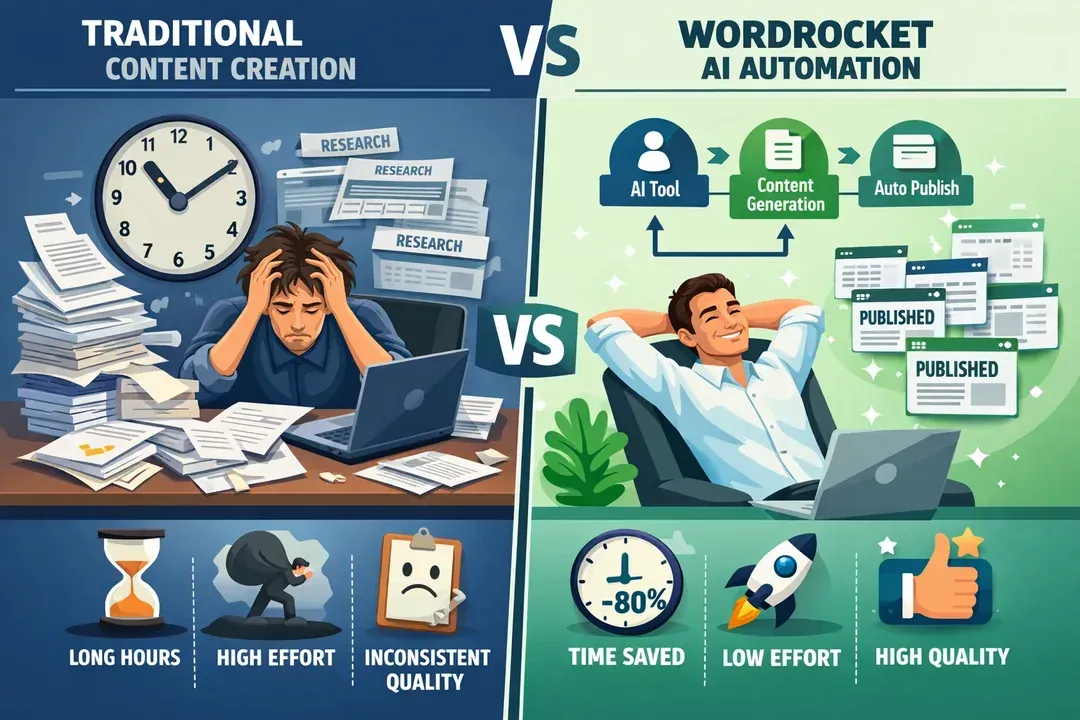
A typical 2,000-word article takes 5-8 minutes to generate, including research and SEO optimization. Publishing to WordPress adds another minute. This compares favorably to the 2-4 hours a human writer typically needs for similar content.
The bulk generation mode significantly accelerates content calendars. Setting up 30 articles for a month takes about 30 minutes of keyword input and parameter setting, then runs automatically. This makes WordRocket AI particularly valuable for content-heavy strategies like niche site building or topical authority approaches that require publishing volume.
WordPress Integration Reliability
Direct publishing to WordPress works smoothly in most cases, though users occasionally report formatting quirks with complex layouts or specific WordPress themes. The platform handles standard blog post formats reliably, but custom post types or advanced page builders may require manual adjustments.
The limitation to WordPress is significant for users managing content across multiple platforms. If you publish to Medium, LinkedIn, or custom CMS platforms, you'll need to copy and reformat content manually. WordRocket AI is purpose-built for WordPress users and doesn't pretend otherwise.
✅ What We Love About WordRocket AI
Lifetime Deal Economics
The $199-$399 lifetime pricing fundamentally changes content production economics. A content writer charging $0.10 per word would cost $200 for a single 2,000-word article. The Pro Lifetime Deal at $199 provides unlimited articles forever, making it cost-effective after just one article compared to hiring writers.
Even compared to AI writing subscriptions that charge $50-$100 monthly, the lifetime deal pays for itself within 2-4 months for regular users. For agencies or niche site builders producing 50+ articles monthly, the savings reach thousands of dollars annually.
Multi-Model AI Approach
Combining Perplexity, GPT-4, Claude, and Gemini produces noticeably better output than single-model tools. The research layer from Perplexity adds current information, while the choice of generative models allows optimization for different content types.
This flexibility matters because different AI models excel at different tasks. Claude often produces more creative, engaging introductions, while GPT-4 handles technical accuracy well. Having access to multiple models without paying separate subscriptions for each provides real practical value.
BYOK Cost Control
The Bring Your Own API Key model gives transparency and control over AI costs. You pay OpenAI, Anthropic, or Google directly based on actual usage rather than through marked-up subscription tiers.
For high-volume users, this can reduce costs significantly. A typical 2,000-word article might cost $0.10-$0.30 in API fees when using your own keys, compared to $1-$5 per article in many subscription-based AI writing tools. The free plan includes BYOK access, making WordRocket AI viable even without paying for the platform itself.
Automated Internal Linking
The sitemap integration and automatic internal linking saves substantial time while improving SEO. Manually identifying relevant internal links for each article takes 10-15 minutes and requires familiarity with all existing content.
WordRocket AI handles this automatically by analyzing your sitemap and inserting contextual links. For sites with 100+ articles, this feature alone justifies the platform for SEO-focused users.
Bulk Generation Capability
Being able to queue 50 articles at once transforms content operations from daily tasks to weekly planning sessions. You spend 30-60 minutes setting up a month's worth of content, then let the system execute automatically.
This batch approach works particularly well for niche sites, affiliate content, or topical authority strategies that require consistent publishing volume. It also allows you to capitalize on keyword opportunities quickly when you identify content gaps.
❌ What Could Be Better with WordRocket AI
No Built-In Keyword Research
WordRocket AI assumes you arrive with keywords ready. It doesn't help you discover what to write about, identify search volume, or assess keyword difficulty. You need separate tools for keyword research, adding cost and workflow steps.
For users already invested in SEO tools like Ahrefs or SEMrush, this isn't a problem—you already have keyword data. But beginners or budget-conscious users hoping for an all-in-one solution will be disappointed.
Limited Platform Publishing
The WordPress-only publishing restriction limits flexibility for multi-platform content strategies. If you publish to Medium, LinkedIn, or custom platforms, you'll manually copy and reformat content.
This design choice makes sense given WordRocket AI's WordPress focus, but it means the automation benefits don't extend to users managing diverse content channels.
Brand Voice Limitations
While brand voice training exists, it's not as sophisticated as dedicated tools focused on style matching. The system captures basic tone and formatting preferences but struggles with nuanced voice elements like humor style, cultural references, or industry-specific jargon.
You can achieve consistency across articles, but don't expect the brand voice feature to perfectly replicate your personal writing style. It narrows the gap but doesn't eliminate editing needs.
Content Still Requires Review
Despite fact-checking and multi-model generation, WordRocket AI content isn't publication-ready without human review. You need to verify facts, add unique insights, adjust tone, and ensure the article matches your quality standards.
The platform reduces writing time from hours to minutes, but you should budget 15-30 minutes per article for review and refinement. Users expecting to publish completely unedited AI content will likely produce mediocre results.
Learning Curve for Optimization
Getting the best output from WordRocket AI requires understanding how to structure prompts, which AI models work best for different content types, and how to configure brand voice settings effectively.
The platform isn't difficult to use, but maximizing quality takes experimentation. New users often produce generic content initially, then improve output significantly after learning the system's nuances.
Who Should Buy WordRocket AI?
WordRocket AI delivers the most value for specific user profiles with particular content needs and workflows.
Solo Bloggers and Niche Site Builders
If you manage one or multiple niche sites and need to publish 20+ articles monthly, WordRocket AI's lifetime deals provide exceptional ROI. The automation handles the bulk of writing work, letting you focus on keyword strategy, monetization, and site growth.
This applies especially to affiliate marketers building topical authority sites where content volume and consistency matter more than distinctive voice. Product reviews, informational guides, and how-to content work particularly well with WordRocket AI's capabilities.
Small Agencies with WordPress Clients
Agencies managing content for 3-10 WordPress-based clients can use WordRocket AI to scale production without hiring additional writers. The brand voice profiles handle different client tones, while bulk generation manages multiple content calendars efficiently.
The Lifetime Agency plan at $399.99 supports 25 WordPress sites with unlimited articles, making the per-client cost negligible compared to writer fees or other AI subscriptions.
SEO Specialists Focused on Content Volume
SEO professionals implementing topical authority strategies or content-driven link building benefit from WordRocket AI's combination of volume capability and SEO optimization. The automated internal linking and proper content structure support SEO goals without manual implementation.
Choose WordRocket AI if your SEO strategy depends on publishing consistent, well-optimized content across multiple topic clusters or supporting pages.
Content Marketers on Limited Budgets
Marketers who need regular content but lack budget for full-time writers or expensive AI subscriptions find WordRocket AI's lifetime deals particularly attractive. The free plan with BYOK lets you start with zero platform cost, paying only for AI API usage.
This works well for startups, bootstrapped businesses, or side projects where content is important but budget is constrained.
WordPress-Committed Users
If your entire content operation runs on WordPress and you don't need to publish to other platforms, WordRocket AI's deep WordPress integration provides workflow benefits that generic AI writers can't match.
The direct publishing, automated formatting, and internal linking work seamlessly because the platform was built specifically for WordPress rather than adapted to it.
Who Should Skip WordRocket AI?
WordRocket AI isn't the right solution for every content creator or marketing situation.
Users Needing Multi-Platform Publishing
If you publish content to Medium, LinkedIn, Substack, or multiple platforms beyond WordPress, WordRocket AI's WordPress-only publishing limits its value. You'll get the content generation benefits but lose the automation advantages.
Consider general AI writing tools with broader platform support if your content strategy spans multiple channels.
Brands Requiring Distinctive Voice
Companies where brand voice is a primary differentiator and content must reflect specific personality, humor, or cultural positioning should approach WordRocket AI cautiously. The platform produces competent, informative content but struggles with nuanced voice elements.
If your content's value comes from unique perspective, personal experience, or distinctive style rather than information delivery, WordRocket AI provides a starting point but requires substantial editing to meet brand standards.
Writers Seeking Creative Content
WordRocket AI excels at informational, SEO-focused content but underperforms for creative writing, narrative storytelling, or highly original thought leadership. The fact-checking and research features optimize for accuracy and information synthesis, not creative expression.
Choose different tools if your content needs lean toward creative essays, narrative journalism, or original research and analysis.
Users Without Keyword Strategy
If you don't already have keyword research tools or SEO knowledge, WordRocket AI leaves a significant gap in your workflow. The platform doesn't help you identify what to write about or which topics offer SEO opportunities.
Beginners might find more value in all-in-one platforms that include keyword research, even if they cost more, until they develop SEO skills and keyword strategies.
Teams Needing Collaboration Features
WordRocket AI focuses on content generation and publishing rather than team collaboration. If you need robust approval workflows, multi-user editing, content calendars with team assignments, or detailed permission controls, the platform's collaboration features are limited.
Agencies with complex approval processes or large content teams should evaluate whether WordRocket AI integrates with their existing project management tools or consider platforms with stronger collaboration features.
How to Get the Best Deal on WordRocket AI
WordRocket AI's pricing structure offers multiple options, and choosing the right plan significantly impacts long-term value.
Start with the Free Plan
The free tier provides 10 articles monthly with BYOK access, letting you test the platform without financial commitment. Use this period to evaluate content quality, learn the interface, and determine if WordRocket AI fits your workflow.
Pay only for AI API usage during this testing phase. If you're generating 2,000-word articles, expect API costs around $0.10-$0.30 per article depending on which models you use.
Calculate Your Break-Even Point
Before choosing between monthly subscriptions and lifetime deals, calculate how many articles you'll produce monthly. If you publish 20+ articles monthly, lifetime deals pay for themselves within 3-6 months compared to monthly subscriptions.
The Pro Lifetime Deal at $199 becomes cost-effective after just two months if you're on the $49.99 Premium monthly plan, or after 20 months compared to the $10 Starter plan.
Consider the Lifetime Agency Plan for Multiple Sites
If you manage 10+ WordPress sites or run an agency, the Lifetime Agency plan at $399.99 offers the best per-site economics. Supporting 25 WordPress sites with unlimited articles means a per-site cost of $16 one-time, compared to $10-$50 monthly per site with other tools.
The unlimited brand voices in the Agency plan also eliminate the need to choose which clients get brand voice profiles.
Watch for Promotional Periods
WordRocket AI occasionally offers promotional pricing on lifetime deals, sometimes reducing the Pro Lifetime from $199 to $149 or adding bonus features. These promotions typically occur during product launches, major updates, or holiday periods.
If you're not in urgent need, subscribing to the email list or following the company's announcements can alert you to limited-time offers.
Evaluate BYOK Costs Honestly
The BYOK model saves money for high-volume users but requires managing API keys and monitoring usage. Calculate your expected monthly API costs based on article volume and model preferences.
For users generating 50+ articles monthly with GPT-4, API costs might reach $15-$30 monthly. This is still cheaper than most AI writing subscriptions, but it's not free. Factor these costs into your total budget when comparing plans.
Frequently Asked Questions About WordRocket AI
Does WordRocket AI content pass AI detection tests?
WordRocket AI content typically scores 70-85% human-written on AI detection tools due to its multi-model approach and fact-checking layer. However, AI detection is imperfect and scores vary by topic, settings, and how much you customize the output. The content reads more naturally than single-model AI outputs, but you should still review and edit articles to add unique insights and voice elements that further humanize the content.
Can I use WordRocket AI without WordPress?
You can generate content with WordRocket AI without WordPress, but you lose the automated publishing, internal linking, and formatting features that provide much of the platform's value. The content generation works independently, but you'll need to manually copy, format, and publish articles to non-WordPress platforms. WordRocket AI is specifically designed for WordPress users and delivers the most value when used with WordPress sites.
How does the BYOK model work and what does it cost?
BYOK (Bring Your Own API Key) means you create accounts directly with AI providers like OpenAI, Anthropic, or Google, obtain API keys, and connect them to WordRocket AI. The platform uses your keys to access AI models, and you pay the AI providers directly based on usage. A typical 2,000-word article costs $0.10-$0.30 in API fees depending on which models you use. This provides cost transparency and control compared to subscription models where AI costs are bundled and marked up.
What's the difference between monthly plans and lifetime deals?
Monthly plans charge recurring fees ($10-$49.99 monthly) for ongoing access, while lifetime deals require one-time payments ($199-$399.99) for permanent access. Lifetime deals become more economical after 4-10 months depending on which tier you choose. Monthly plans offer flexibility to cancel if your needs change, while lifetime deals provide better long-term value if you'll use the platform consistently. Both options include the same core features at their respective tiers.
How many WordPress sites can I connect to WordRocket AI?
The number of WordPress sites varies by plan: Pro Lifetime supports 5 sites, Premium Lifetime supports 10 sites, and Lifetime Agency supports 25 sites. Monthly plans typically follow similar limits based on tier. Each connected site can receive direct publishing, internal linking, and automated formatting. If you manage more sites than your plan allows, you'll need to disconnect and reconnect sites or upgrade to a higher tier.
Does WordRocket AI include keyword research tools?
No, WordRocket AI does not include keyword research functionality. You need to bring your own keywords from separate tools like Ahrefs, SEMrush, Google Keyword Planner, or free alternatives. The platform assumes you arrive with a keyword or topic and handles the research, writing, and publishing from that starting point. This is a deliberate design choice focusing on content generation rather than building an all-in-one SEO suite.
Can WordRocket AI write in languages other than English?
WordRocket AI supports multiple languages through its underlying AI models (GPT-4, Claude, Gemini), which are multilingual. You can input topics in various languages and receive content in those languages. However, the platform interface is primarily English, and SEO optimization features are most refined for English content. Quality in other languages depends on the specific AI model's proficiency in that language, with major languages like Spanish, French, and German generally producing good results.
How much editing do WordRocket AI articles typically need?
Most WordRocket AI articles require 15-30 minutes of editing to reach publication quality, though this varies based on topic complexity and your quality standards. Common editing needs include verifying facts, adding unique insights or personal experience, adjusting tone to match brand voice precisely, and refining introductions and conclusions. The platform produces solid first drafts that cover topics comprehensively, but human review ensures accuracy and adds the distinctive perspective that differentiates quality content.
Final Verdict: Is WordRocket AI Worth It?
WordRocket AI delivers substantial value for WordPress-focused content creators who need to produce SEO-optimized articles at scale without ongoing subscription costs. The platform's combination of multi-model AI generation, fact-checking, and automated WordPress publishing addresses real workflow pain points for bloggers, niche site builders, and small agencies.
The lifetime deal pricing fundamentally changes content production economics. At $199 for unlimited articles, the Pro Lifetime Deal costs less than hiring a writer for a single 2,000-word article, yet provides permanent access to automated content generation. For users publishing 20+ articles monthly, this represents thousands of dollars in annual savings compared to hiring writers or paying ongoing AI subscriptions.
Content quality meets the standards needed for informational blog posts, product reviews, how-to guides, and SEO-focused articles. The multi-model approach and Perplexity fact-checking produce more natural, accurate content than single-model AI writers. However, the output still requires human review and editing to add unique perspectives and ensure brand voice alignment.
The WordPress integration provides genuine automation benefits beyond just content generation. Automated internal linking, direct publishing, and proper formatting eliminate 15-20 minutes of manual work per article. For users managing multiple WordPress sites, this workflow efficiency compounds significantly.
WordRocket AI's limitations are clear and should inform your decision. The lack of keyword research tools means you need separate SEO resources. The WordPress-only publishing restricts multi-platform strategies. Brand voice features help but don't perfectly replicate distinctive writing styles. These aren't flaws in execution but rather deliberate design choices focusing on specific use cases.
Choose WordRocket AI if you:
- Publish 15+ SEO-focused articles monthly to WordPress sites
- Want to eliminate ongoing content subscription costs through lifetime deals
- Already have keyword research tools and SEO strategy in place
- Value workflow automation and direct WordPress publishing
- Need to scale content production without hiring additional writers
Skip WordRocket AI if you:
- Publish primarily to platforms other than WordPress
- Require distinctive brand voice as a primary content differentiator
- Need all-in-one SEO tools including keyword research
- Produce mainly creative or narrative content rather than informational articles
- Want completely hands-off content that requires no editing
For its target audience of WordPress content creators focused on volume and SEO, WordRocket AI represents exceptional value, particularly through lifetime pricing options. The platform won't replace skilled human writers for content where unique voice and original insights matter most, but it effectively automates the production of informational content that forms the foundation of many successful content marketing strategies.